Ready to dive into the classics?
Introduction to Tang Poetry—Enter the Golden Age of Chinese Literature
Learn to read Tang poetry with confidence—original text + translation. No Classical Chinese required.

Comprehensive Online Course, just $299 $199 until 9 March!
Outlier products are used and recommended at:
What it is
The Golden Age of Chinese Verse is a 12-week culture course on the greatest poetry of the Tang dynasty (618–907)—often considered the high point of Chinese literary history.
You’ll read a curated selection of famous poems in the original Chinese and in translation, with clear, guided explanations of:
what the poem is actually saying (line by line, when needed)
the imagery, symbolism, and emotional tone
the historical and philosophical background
the poetic forms that shaped Tang verse (like juéjù 絕句 | 绝句 and lǜshī 律詩 | 律诗)
This isn’t a course for memorizing trivia. It’s a course for learning how to read Tang poetry like an educated reader, with enough context to appreciate what makes it brilliant.
Who is it for?
Chinese learners who want the culture behind the language
You’ve studied modern Mandarin (maybe for years)… but Tang poetry still feels like a sealed vault.
This course gives you a guided way in—so you can read famous poems in the original Chinese and in translation, and actually understand what you’re looking at.
Curious readers who love literature, history, and poetry
You don’t need to be a sinologist to enjoy Tang poetry.
If you like great literature—and you want to explore the worldview of traditional China through its most famous art form—this course will be right up your alley.
Anyone who’s been intimidated by Classical Chinese
Tang poetry has a reputation for being “too hard.”
This course is designed to be approachable: we’ll give you the context, the structure, and the explanations you need to follow along confidently.
No Classical Chinese required
Curriculum
This course is organized into three phases, so you build the foundations first—then move through the major styles, themes, and poets of the Tang.
Phase 1 — Foundations & Early Forms
Week 1: The Tang World
The “Golden Age” (618–907), the scholar-official, and the intellectual backdrop: Confucianism, Daoism, and Buddhism.
Week 2: The Quatrain (Jueju)
Classical vs. modern Chinese, character-to-meaning mapping, and the structure of the 5-character quatrain.
Core poem: Li Bai — “Quiet Night Thought”
Week 3: Regulated Verse (Lüshi)
How 8-line regulated verse works, plus the art of parallelism and tonal patterning.
Core poem: Cui Hao — “Yellow Crane Tower”
Phase 2 — The High Tang Apex
Week 4: Frontier Poetry (Biansai shi)
Heroism, exile, the sorrow of separation—and the mythic world beyond the frontier passes.
Week 5: Wang Wei & the Nature School
“Painting in words,” stillness, emptiness, and Chan (Zen) aesthetics.
Core poem: Wang Wei — “Deer Park”
Week 6: Meng Haoran & Rustic Contentment
Fields and gardens, friendship, hospitality, and the ideal of a quieter life.
Week 7: Li Bai — The Poetry Immortal
Moon, wine, freedom, and the Daoist imagination.
Core poem: Li Bai — “Drinking Alone Beneath the Moon”
Week 8: Du Fu — The Poetry Sage
Social realism, historical witness, and the An Lushan Rebellion.
Core poem: Du Fu — “Spring View”
Phase 3 — Mid-Tang Reform & Late Tang Aestheticism
Week 9: Bai Juyi & the New Yuefu Movement
“Poetry for the people”: clarity, narrative force, and social critique.
Core poem: Bai Juyi — “The Charcoal Seller”
Week 10: Innovation & Exile (Han Yu / Liu Zongyuan)
The Classical Prose Movement, intellectual rigor, and minimalist landscapes of exile.
Core poem: Liu Zongyuan — “River Snow”
Week 11: Late Tang Melancholy (Du Mu / Li Shangyin)
Decline, memory, ambiguity, and dense allusion.
Core poem: Li Shangyin — “The Brocade Zither”
Week 12: Legacy & the Translation Challenge
From Tang verse to Song lyrics (Ci)—and why Tang poetry can feel “untranslatable.”
Ready to start reading Tang poetry?

Start reading Tang poetry with confidence
Join The Golden Age of Chinese Verse and work through the Tang dynasty’s greatest poems with guided explanations, original text, and translation.
100% risk free - 30 day money back guarantee

Here's what you get:
12 weeks of guided lessons
Authentic Tang poems (Chinese + translation)
Clear explanations of meaning + imagery
Poetic forms (jueju, lüshi, and more)
Historical + philosophical context
Appreciation for the golden age of Chinese poetry
Usually $299, now just $199
What you get with this course
Guided close readings
Understand what each poem is doing, line by line when needed.
Original text + translation
Read the Chinese and see great English versions side by side.
The major Tang forms
Learn how quatrains and regulated verse actually work.
Culture & context
History, philosophy, and the world behind the poems.
The Tang masters
Li Bai, Du Fu, Wang Wei, Bai Juyi, and more.
Live Q&A Sessions
Ask your questions directly and get answers
See why learners can’t get enough
We’ve helped hundreds of students learn Classical Chinese and other aspects of traditional Chinese culture and history.
Here’s what they say:
These classical Chinese courses were right up my alley as I'm more interested in older Chinese culture vs. modern-day (and reading vs speaking), but incidentally force me to learn some modern Chinese along the way!
Peter W.
Margreet B.
Chris L.
I did learn to read some 古文 and 文言文 in the Taiwanese education system growing up. However, the method of teaching is purely chalk and talk. The teacher read the text, read out the translation in 白話 and we copy it down. The teacher would point out a sentence that is a 倒裝句 and the meaning of a peculiar or unusual vocabulary for us to memorise. That is the extent of teaching and learning of 古文/文言文 in my time. Consequently, I would have a hard time trying to understand a new 古文/文言文 text on my own for years until I took the Intro to CC course. Thank you John Renfroe and Ash Henson. I am very grateful for the courses as well as the teaching and expert knowledge provided.
Susan C. (native Mandarin speaker)
Meet Your Teacher
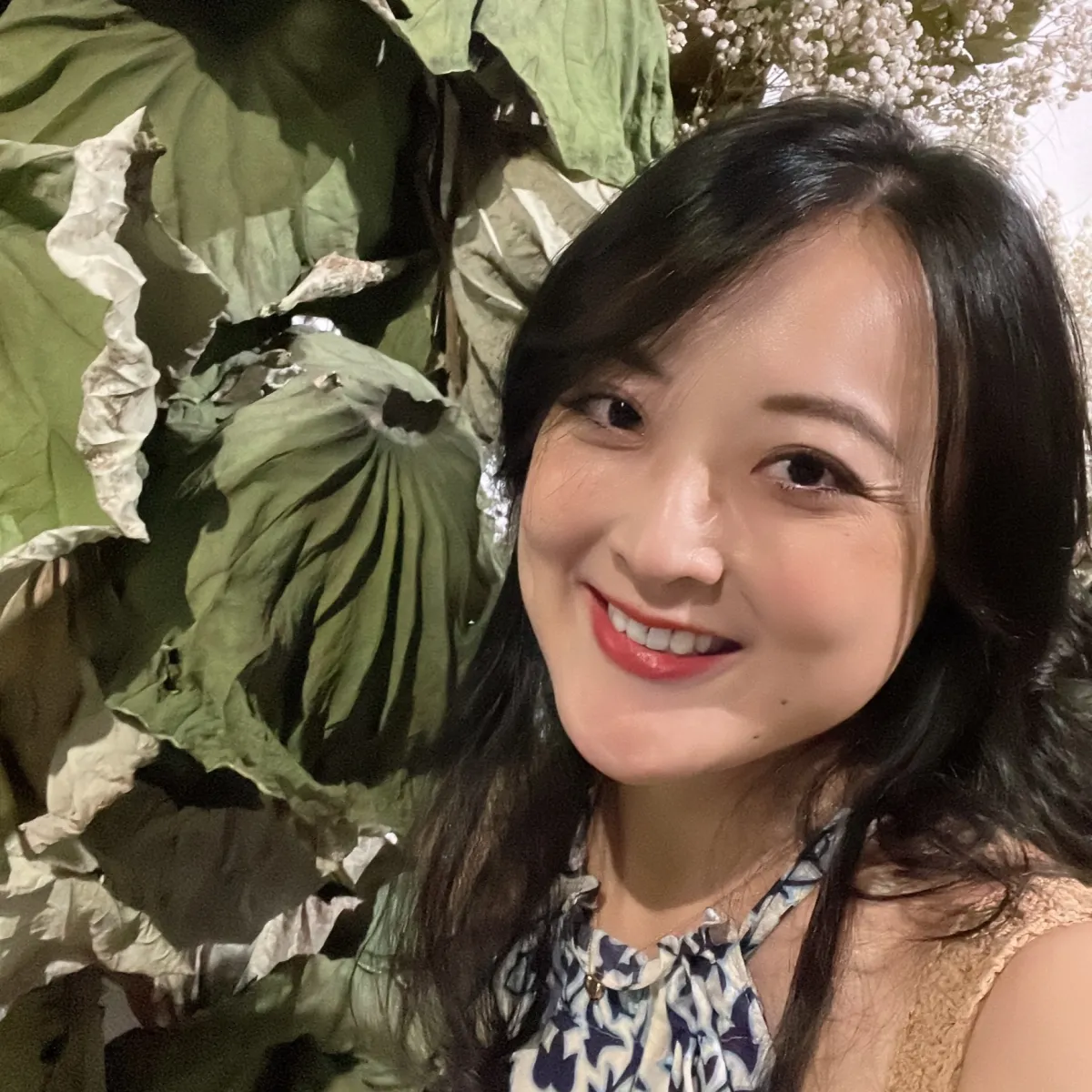
Christine Shen
Lead Instructor
Christine is an experienced Chinese instructor with two master’s degrees in language teaching. Over her career, she has taught diplomats and high-ranking managers in major companies, providing instruction from basic daily Chinese to advanced professional language. She also taught Tang Poetry at the American Institute in Taiwan (AIT). Her extensive background in language education and hands-on experience with diverse professional clientele allows her to offer tailored and practical lessons. She is passionate about helping students achieve fluency and confidence in Chinese, empowering them to excel in both personal and professional contexts.
Frequently Asked Questions
Can I go at my own pace? Will I be able to access the course once I've finished it?
Yes! You get lifetime access, so we'll keep everything available online so that you can go through it at your own pace and review it whenever you want to!
How much Chinese do I need to know to take this course?
You can take this course regardless of your level of Chinese—or even if you don't know any Chinese at all! We'll be reading the texts in both the original Chinese and in English translation. So if your Chinese is up to the task, you'll be able to read the original, and if not, the English translations will still help you to appreciate and understand the poetry.
How long does the course take to complete?
There are 12 lessons. We'll be releasing 1 lesson per week while the course is live, but you can go at whatever pace suits you!
How much time will it require per lesson?
That will depend on your level, but probably a few hours per lesson. The course is structured like a university course, so that should give you a guideline as to how much time you'll need.
Each video lesson will be about 30 minutes long. You'll also get access to regular "office hours" on Zoom, so you can pop in and ask questions if you'd like. There's also a discussion forum, so if you can't make it to the office hours, you can still get your questions answered.
Will I need anything (apps, etc.) in order to take the course?
Nope! We'll provide everything you need on the course platform.
What does "lifetime access" mean?
In practical terms, it means the course materials will be available online for as long as Outlier is in business. If we do ever go out of business or otherwise need to remove the course for any reason, we'll make the material available for you to download for a period of at least 6 months.
Will the course be in simplified or traditional characters?
We'll provide all texts in both simplified and traditional characters.
Can I get a refund if I decide the course isn't for me?
Yes! We have a 30-day, no questions asked refund policy. If you decide you don't like the course for whatever reason, just reach out by then and I'll be happy to give you a full refund. For those who sign up before the course goes live, the rule is "30 days from the start of the course."
Will there be other students at my level? Can we collaborate with other students or form study groups?
Definitely! There are always plenty of students at all levels in these "culture" courses. Most of them (including this one) are meant for people with any level of Chinese!
And sure, working together is no problem! You'll get access to a private online community where you can work together, ask questions, share notes, etc.
Copyright © 2026 Outlier Linguistics - All Rights Reserved