
Learn about Ancient China: history, culture, and archeology
A university-level course on the history of early China, from the origins to about 200 CE
Full University level Online Course, Just $299!
In this online course, you'll learn about the history and culture of early China, and about recent archeological discoveries that are re-shaping our understanding of the period:
• The Neolithic Origins of Chinese culture
• The (mythical?) Xia dynasty
• The Shang and their oracle bones
• The Western Zhou period and their bronzes
• The Spring & Autumn period and the decline of the Zhou
• The Warring States period and the hundred schools of thought
• The earliest empires: the Qin and Han
This course is self-paced, so you can join any time!
Student Testimonials (previous courses)
Randy
USA (living in China)
Jim
USA
Susan
Taiwan (living in Australia)
Chris
USA (living in Finland)
Margreet
Netherlands (living in NZ)
Anand
India
Who is this for?
For History Buffs
Whether you're learning Chinese, or simply interested in Chinese history and culture, this course is for you. It will be taught entirely in English and requires no Chinese language ability. All primary sources will be given in translation.
For Chinese Learners
The period covered in this course is the wellspring of Chinese culture—from the oracle bones of the Shang through Confucius and the Hundred Schools of Thought in the Warring States period, this is fundamental cultural knowledge that will enrich your study of the Chinese language.
Lifetime Access
The course is entirely self-paced, and like all of our courses, you'll still be able to access all of the materials after you're finished. No need to stress about time—you can go through the lessons on your own time, and ask us for help whenever you need it!
Curriculum
Part I: Pre-history and origins
Lesson 1: Time, Space, and Language
Calendar and Chronology
The Environment of Ancient China
Language and Writing
Archeology topic: What is Archeology?
Lesson 2: Neolithic Origins
Longshan Cultures
Archeology topic: Yaoshan 瑤山 (Liangzhu 良渚 culture)
Lesson 3: The (mythical?) Xia Dynasty
The Spread of Agriculture and Neolithic Technology
Archeology topic: Erlitou 二里頭
Lesson 4: The Shang and their culture
Shang Divination Procedures
Primary Source Reading: Oracle Bone Inscriptions
Archeology topic: Yinxu 殷墟 and Bronzes
Part II: The Classical Period
Lesson 5: The Western Zhou
Western Zhou Bronzes and Historiography
Primary Source Reading: Bronze Inscriptions
Archeology topic: Western Zhou Bronzes
Lesson 6: The Spring & Autumn
The Spring and Autumn Period
Primary Source Reading: Records of The Grand Historian 《史記》 (excerpts)
Archeology topic: The Tomb of Marquis Yi of Zeng 曾侯乙墓
Midterm Exam
Lesson 7: The Warring States
The Age of the Warrior and the Thinker
Primary Source Reading: Strategies of the Warring States 《戰國策》 (excerpts)
Archeology topic: Guodian 郭店
Lesson 8: The Hundred Schools of Thought
The Heritage of Antiquity
Primary Source Reading: The Analects of Confucius 《論語》and Laozi's Daodejing 《道德經》 (excerpts)
Archeology topic: The Shanghai Museum Bamboo Strip Texts 上海博物館藏戰國楚竹書
Part III: The Early Empires
Lesson 9: Qin and the Beginning of Empire
A State Organized for War
Primary Source Reading: Hanfeizi 《韓非子》 (excerpts)
Archeology topic: Qinshihuang’s Mausoleum 秦始皇帝陵, Shuihudi 睡虎地秦簡
Lesson 10: The Chu-Han Contention
The Conquering Empire
Primary Source Reading: “The Battle at Gaixia” 《史記・項羽本紀》
Archeology topic: Mawangdui 馬王堆
Lesson 11: The Western Han
The Rise of the Gentry and the Crisis in Political Institutions
Primary Source Reading: Huainanzi 《淮南子》 (excerpts)
Archeology topic: The Han Tomb at Mancheng 滿城漢墓
Lesson 12: The Eastern Han
The Civilization of the Han Age
Primary Source Reading: The Book of the Later Han 《後漢書》 (excerpts)
Archeology topic: The Wuliang Shrine 武梁祠
Final Exam
About this course
This course is self paced! You get access to all of the lectures and Q&A sessions we did in the previous live cohort of the course, plus I'll continue doing regular live "office hours" Q&A sessions via Zoom. Exams will be given at the end of each unit, and a passing score at the end earns you a Certificate of Completion, which will serve as fulfillment of prerequisites for future courses!
It's structured like an undergraduate-level history survey course aimed at a general audience. The course will focus on the political, intellectual, and social developments from the Neolithic period through the end of the Han Dynasty (ca. 220 CE). We will pay particularly close attention to recent archeological finds, which have substantially re-shaped our knowledge of the early and classical periods of ancient China.
In each lesson, you'll be assigned a reading from Li Feng's Early China: A Social and Cultural History. Most lessons will also have readings of excerpts from primary sources, such as oracle bone and bronze inscriptions, excerpts (in translation) from Records of the Grand Historian, The Strategies of the Warring States, The Analects of Confucius, The Daodejing, Hanfeizi, and more. Supplementary (optional) readings will also be supplied for those who want to read further. Each lesson will consist of two lectures: one on the social and political developments of the period, and one on important recent archeological discoveries.
Demo Lesson
Your Instructor
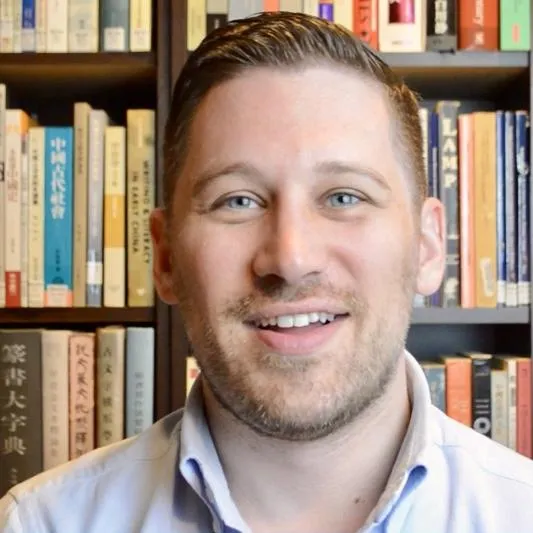
John Renfroe
Co-founder, Outlier Linguistics
Before co-founding Outlier, John studied Linguistics and Paleography in the Graduate Institute of Chinese at National Taiwan Normal University. He co-founded and later ran the Taipei Classical Chinese Reading Group, a weekly reading group consisting mostly of graduate Sinology students from western universities. He also taught classical Chinese to members of the group who had no previous instruction in the language. His coursework and research focused on excavated Warring States bamboo texts, historical Chinese character morphology, and the Shuowen Jiezi 說文解字 and its commentaries and criticism.
Frequently Asked Questions
Can I go at my own pace? Will I still be able to access the course once I've finished it?
Yes! You get lifetime access, so we'll keep everything available online so that you can go through it at your own pace and review it whenever you want to!
How much Chinese do I need to know to take this course?
None! This is not a language course, so it will be taught entirely in English. All readings will be in English, and primary sources will be given in English translation (and in the original Chinese, for those who wish to read the originals).
How long does the course take to complete?
There are 12 lessons, and each lesson consists of two one-hour lessons and one recording of an hour-long Q&A session. Additionally, you'll need to read 1-2 chapters from the textbook and also the supplementary readings for each lesson. Altogether, the course contains about 40 hours of video, and perhaps 30 hours of reading assignments.
How much time will it require per lesson?
The main readings from the textbook will be about 30 pages per lesson. There are two lectures in each lesson, and each will be about an hour.
Will I need anything (apps, etc.) in order to take the course?
Only the main textbook is required, as all other readings will be supplied in PDF form.
- Early China: A Social and Cultural History by Li Feng (required)
However, there are some other books that you may also find interesting and helpful:
- A History of Chinese Civilization (2nd edition) by Jacques Gernet (recommended)
- The Early Chinese Empires by Mark Edward Lewis (recommended)
- Chinese History: A New Manual (Enlarged Sixth Edition) by Endymion Wilkinson (highly recommended; also available in Pleco)
- The Cambridge History of Ancient China Edited by Michael Loewe and Edward L. Shaughnessy (recommended)
- Sources of Chinese Tradition by Compiled by Wm. Theodore de Bary & Irene Bloom (recommended)
- Chinese Society in the Age of Confucius by Lothar von Falkenhausen (recommended)
- The Formation of Chinese Civilization by Kwang-Chih Chang et al (recommended)
- The Archeology of Ancient China by Kwang-Chih Chang (recommended)
- 顧頡剛《中國上古史研究講義》 (recommended)
- 徐中舒《徐中舒论先秦史》 (recommended)
- 王力《中国古代文化尝试》 (recommended)
- 李学勤 主编《商史与商代文明》 (recommended)
- 李学勤 主编《西周史与西周文明》 (recommended)
- 李学勤 主编《春秋史与春秋文明》 (recommended)
- 李学勤 主编《战国史与战国文明》 (recommended)
What does "lifetime access" mean?
In practical terms, it means the course materials will be available online for as long as Outlier is in business. If we do ever go out of business or otherwise need to remove the course for any reason, we'll make the material available for you to download for a period of at least 6 months.
Can I get a refund if I decide the course isn't for me?
Yes! We have a 30-day, no questions asked refund policy. If you decide you don't like the course for whatever reason, just reach out by then and I'll be happy to give you a full refund.
Will there be assignments or homework?
The assignments for each lesson will include a main reading from the textbook plus primary sources in translation. Supplemental (optional) readings will also be provided. Overall, about 30 pages of required reading on average per lesson, plus 20-50 pages of optional reading.
There are two exams: a "midterm" and a "final." These are optional, but if you complete them, you can get a certificate of course completion.
Can we collaborate with other students or form study groups?
Definitely! There are over 150 students in the course community, so there are plenty of people of all backgrounds and interests that you can interact with. And sure, working together is no problem!
Full University level Online Course, Just $299!
★ ★ ★ ★ ★
Rated 4.8/5 by 1000's of Chinese learners

30-DAY MONEY BACK GUARANTEE!
We believe in the quality of our products and are committed to your satisfaction. That’s why we offer a 30-Day Money Back Guarantee on all purchases. If you are not completely satisfied with your purchase, simply contact us within 30 days for a full refund, no questions asked.
Copyright © 2026 Outlier Linguistics - All Rights Reserved